


Lighting: The Hidden Key to a Perfectly Designed Room
At Sonoma Restorations™, we believe lighting is the invisible design language that shapes how a room feels. It sets the tone of the room, highlights unique pieces and craftsmanship, and determines how comfortably it is to play, work, or relax within a space. The right fixture and bulb pairing can make a room feel grounded and intentional; the wrong one can flatten atmosphere and undermine everything else you’ve designed.
Lighting isn’t an accessory — it’s ambiance, and the heartbeat of every well-composed space. Whether you’re building a billiard room, a whiskey lounge, or a rustic home office, lighting defines both the look and the emotion of the environment.
In this guide, we’ll break down how to select the right light for mood and function — from color temperature and lumens to mounting height and layering — and how to match those specifications to the handcrafted fixtures in the Sonoma Restorations™ Lighting Collection.
Lighting Psychology and Human Perception
Light doesn’t just reveal a room; it changes how we feel inside it.
- Warm light (below 3000 K): Encourages relaxation and social connection.
- Cool light (3500–4500 K): Boosts alertness and precision.
- Balanced layering: Helps occupants transition naturally from focused work to leisure.
In a billiard room, slightly cooler overhead light supports concentration and depth perception, while warmer perimeter lighting restores comfort and balance. This duality creates an emotional rhythm — a subtle cue that tells your body when to lean in and when to unwind.

Understanding Light: Color Temperature and Mood
Every bulb emits light at a specific color temperature, measured in Kelvin (K). This measurement defines whether light feels “warm” or “cool” to the eye. Since the introduction of the LED, manufacturers have designed more and more light temperatures to customize the look of a room as well as the application of the light. However, most simply put, the lower the kelvin temperature of a light, the warmer in color it is to the eye. The higher the kelvin temperature, the cooler it appears to the eye.
- 2700 K – 3000 K (Warm White): Amber, candle-like glow; ideal for comfort, relaxation, and intimate settings.
- 3500 K – 4000 K (Neutral White): Balanced brightness with natural color rendering; perfect for task lighting.
- 4500 K – 5000 K (Cool White): Crisp daylight tone that heightens visual alertness and color contrast.

According to the Illuminating Engineering Society (IES), choosing the correct color temperature for each activity increases both comfort and visual accuracy. Warm light softens the look of a material, and smooths out imperfection on surfaces, while cooler light sharpens the texture and brings out more detail. For maximum relaxation we suggest having lighting with the same color temperature throughout the room.
Lumens and Output: How Bright Is Bright Enough?
Brightness is measured in lumens, not watts. Watts tell you how much power a bulb uses; lumens tell you how much visible light it emits at the source; while lux measures how much light you are receiving on a surface. Matching the right output to your task or area is crucial.
Slaab™ 44-Inch Pool Table Light — Task Lighting for Performance
The Slaab™ 44" Pool Table Light was built for precision. Its triple-pendant design with metal shades distributes light evenly across regulation 7- and 8-foot tables, eliminating dark spots and glare for the player. For pairing with the proper bulb, we recommend:
- Color temperature: 4000 K (for neutral-white light)
- Output: 1,600–1,700 lumens per bulb (13–17 watts per bulb)
- Color accuracy: 90+ CRI
- Bulb type: A21 LED – diffused light bulb
- Mount height: 36–42 inches above table surface (approx. 500–600 lux)
Positioning matters. Too low and corner pockets disappear in shadows. Too high and players are blinded. Test your setup by standing at each corner and checking that cushions and pockets remain evenly lit. The chain provided can be adjusted to match your ceiling height to table height requirements.

Pillr™ 25" and Staar™ 22" Wooden Table Lamps — Accent Lighting for Ambiance
Both the Pillr™ and Staar™ table lamps bring warmth and character to supporting zones. Each lamp has a maximum of 40 watts of socket power output, which may be paired with the bulb of your choosing for both illumination and color temperature. We recommend using these lamps to soften the tone of a room by providing warm ambiance and not overpowering it with brightness. Try using bulbs with the following specifications for a warm and relaxing look:
- Color temperature: 2700 K – 3000 K
- Output: 450–810 lumens (5–7 watts of input depending on the size of your space)
- Color accuracy: 90+ CRI
- Bulb type: A19 LED – Edison style for character
Together, Slaab™, Pillr™, and Staar™ illustrate the essence of layered design — focus where you need it, softness where you want it.

Fixture Application: Performance vs Ambience
Every Sonoma Restorations™ fixture is built for a defined purpose. We don’t chase trends or mass-market versatility; we build for story and craftsmanship.
Slaab™ 44" Pool Table Light — Precision in Motion
Hand-welded steel brackets and reclaimed-redwood accents form the backbone of this fixture. Each shade directs light downward, ensuring no glare in the player's eyes from light spilling out the sides. The fixture embodies the principle that performance lighting should never feel harsh — it should feel intentional.
The Pillr™ and Staar™ Wooden Table Lamps — The Quiet Counterbalance
These lamps create pools of calm in the periphery of a room. They frame the edges, casting a glow that enhances conversation and relaxation. When paired with the Slaab™, they complete a balanced ecosystem of light — one driving energy, the other restoring it.

The Science of Light Quality
Light quality is about more than brightness — it’s about comfort and accuracy.
- CRI (Color Rendering Index): Measures how faithfully a light source reveals color. Anything above 90 is considered “true color.” High-CRI bulbs bring out the warm reds in reclaimed oak and the cool grays in forged iron.
- Flicker stability: Low-cost LEDs often pulse at invisible frequencies that cause headaches or fatigue over time. Choose bulbs labeled “flicker-free.”
- Color consistency: Ensure every bulb in your fixture emits the same tone. Mismatched temperatures create uneven color across surfaces, making even premium interiors feel disjointed.
How Light Interacts with Materials
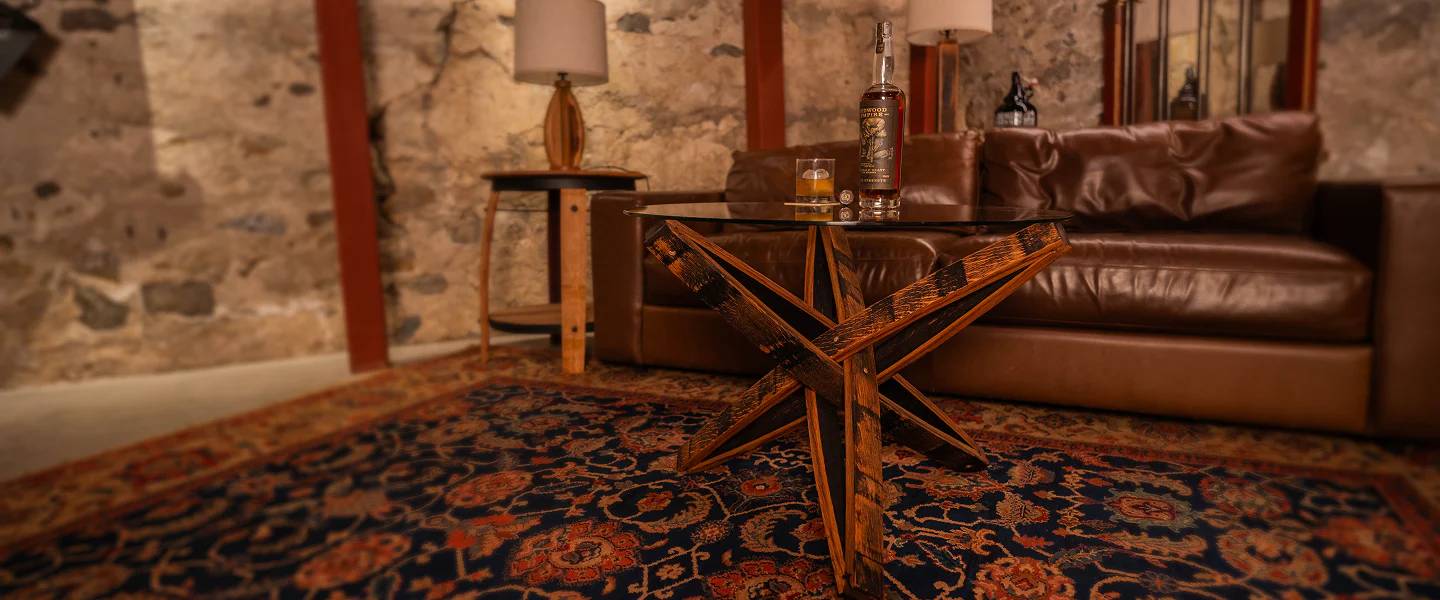
Reclaimed materials react beautifully to thoughtful lighting. Oak darkens and gains richness under warm light, while cooler light reveals its grain patterns and hand-tooled details. Blackened steel and brushed nickel gain definition under neutral white tones. Leather takes on deeper amber hues.
To celebrate the craftsmanship in every piece of Sonoma Restorations™ furniture, pair:
- Warm light (2700–3000 K) for showcasing texture and patina.
- Cool light (3500–4000 K) for clarity and contrast in task zones.

Layering Light for Depth and Function
A well-lit room is never about a single fixture. Layering combines different types of light to shape both atmosphere and usability.
The Sonoma Restorations™ Formula:
- Task Lighting (Slaab™) — directs precision and performance.
- Accent Lighting (Staar™ & Pillr™) — defines warmth and tone.
- Reflected Ambient Light — the subtle bounce from surfaces and ceilings.
Adding dimmers and smart controls allows each layer to shift independently. During gameplay, raise the Slaab™ to full brightness and dim the Staar™ & Pillr™ lamps slightly for focus. Afterward, drop the task lights and let the accents carry the mood.

According to Architectural Lighting Magazine (2024), layered illumination increases perceived comfort and spatial coherence by up to 30 percent.
Mounting Height and Light Distribution
Mounting height determines whether a fixture feels integrated or intrusive. For pool and card tables, 32–36 inches above the surface usually achieves the sweet spot. If your bulbs are especially bright (900 lumens+), raise the fixture slightly or install diffusers. For lower outputs, drop it by an inch or two.
Always test with your intended bulbs before finalizing installation. Proper height ensures every pocket and playing edge remains clearly visible without casting harsh shadows.
Sustainability and Efficiency
Lighting efficiency is part of responsible design. High-quality LED bulbs last 15–25 times longer than incandescent options and consume up to 85 percent less energy. That efficiency complements our commitment to upcycled materials and local production.
By sourcing reclaimed wood from wineries and distilleries, our artisans reduce waste while preserving material heritage. Shipping directly from our workshops minimizes environmental footprint — fewer miles, fewer warehouses, smaller impact.
Pairing long-life LED bulbs with handcrafted fixtures means you replace less, waste less, and appreciate more.
Common Lighting Mistakes and How to Fix Them
-
Mixing Bulb Temperatures
Inconsistent color tones break visual harmony. Keep task fixtures at one Kelvin range and accent lights at another, complementary one. -
Over-Lighting Wood Surfaces
Too much brightness washes out grain detail. Stay under 800 lumens for accent fixtures. -
Ignoring Glare and Reflection
Polished wood, lacquer, or glass can reflect harshly. Use frosted bulbs or shaded fixtures to diffuse light. -
Skipping Dimmers
Without control, lighting feels static. Add dimmers to accent lamps for seamless day-to-night transitions. -
Neglecting Maintenance
Dust on bulbs and shades can cut brightness by 10 percent. Clean regularly to maintain output and color integrity.
Why We Layer, Not Flood
Flooding a room with uniform overhead light flattens its personality. Layering defines zones and creates visual rhythm. A well-designed space guides the eye — bright where work happens, shadowed where rest begins.
At Sonoma Restorations™, we embrace that rhythm. Our fixtures aren’t built to overpower a room; they’re designed to partner with it. The contrast between performance and ambience mirrors daily life — moments of focus balanced by moments of ease.
From Workshop to Room: Craftsmanship and Authenticity
Every Sonoma Restorations™ light begins not on an assembly line but on a workbench. Our artisans cut, weld, and shape reclaimed barrel staves and iron by hand. Each fixture carries its maker’s mark — the subtle irregularities that distinguish handcrafted design from factory repetition.

That authenticity matters. Lighting made with intention connects you to the people and materials behind it. It’s the glow that turns a room into a story — where wood once stored wine, now it warms conversation; where steel once framed a gate, it now frames light. When you turn on a Sonoma Restorations™ fixture, you’re not just illuminating a room — you’re continuing a lineage of American artisanship and sustainable craftsmanship.
Final Thought: Light as Atmosphere
Lighting is the most emotional design element there is. It directs attention, creates comfort, and shapes memory. It can energize a gathering or calm a space at the end of the day.
The right fixture doesn’t merely light a room — it gives it character. It turns reclaimed materials into living art and transforms four walls into something you feel. Bring personality and authenticity into your home today. Explore the Sonoma Restorations™ Lighting Collection — where craftsmanship meets performance, and every light tells a story.
References
- Illuminating Engineering Society (IES) Lighting Handbook, 11th Edition
- Philips Lighting Design Guide, 2024
- WAC Lighting: Layered Illumination for Home Design, 2023
- U.S. Department of Energy: LED Lighting Research Summary, 2023
- Architectural Lighting Magazine: The Psychology of Layered Light, 2024
- National Billiard Lighting Association: Fixture Placement Standards, 2024


1 comment
Dolores consequatur
Carl Collier
Leave a comment
This site is protected by hCaptcha and the hCaptcha Privacy Policy and Terms of Service apply.